
DISASTER RESPONSE & EMERGENCY AID
Emergency power for disaster response: rapidly deployable energy where every minute counts
After a flood, earthquake, storm or power outage, communication, lighting, medical support and crisis coordination must keep functioning. Mobisun supplies mobile solar energy systems for emergency services, governments, NGOs and safety regions.
The Mobisun Solar Trailer, 20ft Solar Container and 40ft Solar Container combine solar panels, battery storage, 230V and 400V power, remote monitoring and generator support. This allows a self-sufficient or hybrid energy supply to be set up quickly on location.
From a mobile crisis post to a regional emergency relief center: Mobisun offers energy at three scale levels for crisis areas, field hospitals and temporary shelters.
Energy is a critical link in every crisis response
Disaster response depends on information, coordination and logistics. Without electricity, essential services can quickly come under pressure.
Consider:
- failed mobile networks
- empty radio and phone batteries
- insufficient lighting at aid and shelter locations
- interrupted digital registration
- failure of pumps and measuring equipment
- limited cooling of food, medicines or materials
- failure of routers, satellite communication and computers
- overloading of available generators
- fuel supply problems
A central energy supply with solar panels and battery storage reduces dependence on continuously running fuel generators. A generator can remain available as a supplementary power source during prolonged bad weather, exceptional load or a low battery status.
One energy platform for multiple crisis functions
The Mobisun systems can be deployed for various crisis functions, depending on the calculated power and chosen configuration.
Crisis coordination and mobile command posts
A temporary command post needs power for communication, information management and decision-making. The systems can supply energy for:
- laptops and monitors
- mobile routers
- satellite communication
- radio and walkie-talkie chargers
- phones and tablets
- printers and scanners
- mapping and registration systems
- audiovisual equipment
- work and emergency lighting
Emergency communication and restoring accessibility
When normal connections are damaged or overloaded, a temporary communication infrastructure may be necessary. The energy systems can be used for:
- temporary mobile cell towers
- 4G and 5G equipment
- Starlink and satellite terminals
- wifi networks
- microwave links
- control room equipment
- communication containers
- camera masts and security systems
Lighting of disaster areas and shelter locations
Safe and reliable lighting is needed for:
- search and rescue operations
- medical triage
- distribution points
- temporary shelters
- sanitary facilities
- storage areas
- passages and escape routes
- registration posts
- nighttime work
- site security
Mobile medical posts and field hospitals
A medical emergency post needs power for more than just medical devices. Lighting, registration, communication, cooling and supporting facilities also depend on electricity. Possible applications:
- examination and treatment lighting
- patient registration
- computers and routers
- diagnostic equipment
- monitors with a suitable energy profile
- chargers for medical devices
- ventilators
- validated cooling equipment
- communication
- temporary office facilities
Water management, pumping and flood control
During floods and other emergencies, electricity may be needed for:
- submersible and drainage pumps
- water quality measurements
- sensors and data loggers
- mobile purification installations
- lighting of pump and work zones
- communication equipment
- dosing and control systems
Temporary shelters and evacuation centers
Shelter locations need energy for basic facilities and organization:
- lighting
- phone charging points
- information provision
- wifi and communication
- cooling
- registration desks
- security
- ventilation
- workstations for staff
- common areas
Logistics, distribution and storage
The logistics chain behind the relief effort also depends on power. Mobisun systems can supply energy for:
- warehouse lighting
- computers and inventory management
- scanners and label printers
- camera surveillance
- communication equipment
- battery charging points
- electric tools
- temperature and humidity monitoring
- refrigerated storage within available capacity
Why solar energy in disaster response?
Solar energy and battery storage offer specific advantages for crisis deployment.
Quickly operational
The Solar Trailer can be set up by one person in about ten minutes. The 20ft and 40ft Solar Containers have a setup time of approximately thirty minutes.
Less dependent on fuel logistics
Solar panels produce new energy daily. This means not every kilowatt-hour has to come from supplied fuel.
Quiet during operation from sun and battery
When equipment is powered from the solar panels and battery, no continuously running combustion engine is needed. That is valuable at medical posts, shelter locations and nighttime crisis coordination.
No local exhaust gases during battery use
The battery and solar part produces no local combustion gases during normal use. Any backup generator must be placed outdoors and in accordance with applicable safety regulations.
Both 230V and 400V
The three large systems have single-phase and three-phase connection options. The Solar Trailer delivers 230V 16A and 400V 10A. The two containers offer 230V 16A and 400V 63A.
Remote insight
Via remote monitoring, managers can track performance and system status remotely. This can reduce unnecessary site visits and helps plan consumption and maintenance.
Scalably deployable
A mobile trailer can be used for the initial response. A container can then form a longer-term energy supply for a larger crisis center, field hospital or shelter location.
The three Mobisun systems for disaster response
From mobile emergency power to regional energy hub: three scale levels for crisis deployment.
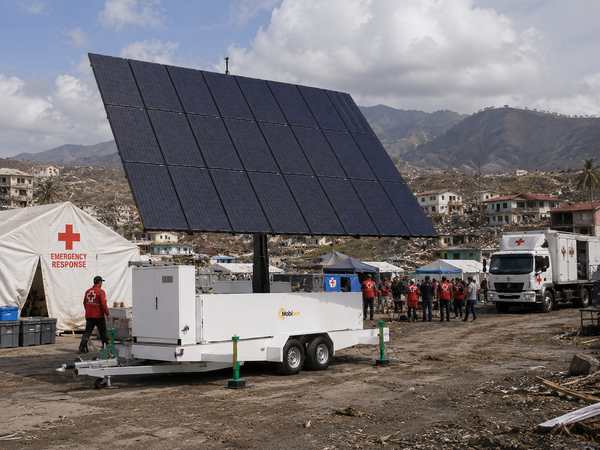
Mobisun Solar Trailer
Rapidly deployable energy for the first crisis phase
20kWh battery · 8kWp solar panels · 7kVA AC outputThe Mobisun Solar Trailer is a mobile power plant on wheels. The system is designed for situations where energy needs to be moved, set up and deployed quickly.
The 30m² solar panel field uses solar tracking. Mobisun states that this can increase yield by up to 25%. The system combines the solar panels with a 20kWh battery and a 10kVA backup generator.
Key specifications
- Battery storage: 20kWh
- Solar power: 8kWp
- Panel area: Approx. 30m²
- AC output: 7kVA
- Backup generator: 10kVA
- 230V: 1-phase, 16A
- 400V: 3-phase, 10A
- Solar tracking: Up to 25% extra yield
- Protection class: IP54
- Monitoring: Remote monitoring & control
- Setup time: Approx. 10 minutes
- Weight: Approx. 3.5 tons
Suitable for
- initial emergency aid
- mobile command post
- temporary communication hub
- medical triage
- search and rescue teams
- emergency lighting
- temporary shelter
- support during power outages
- mobile water or pump installations
- energy during recovery work
Strategic advantage
The Solar Trailer is the most mobile of the three systems. This means it can be deployed first for the acute response and later moved to another location or function. Mobisun also offers the trailer via rental and lease arrangements.
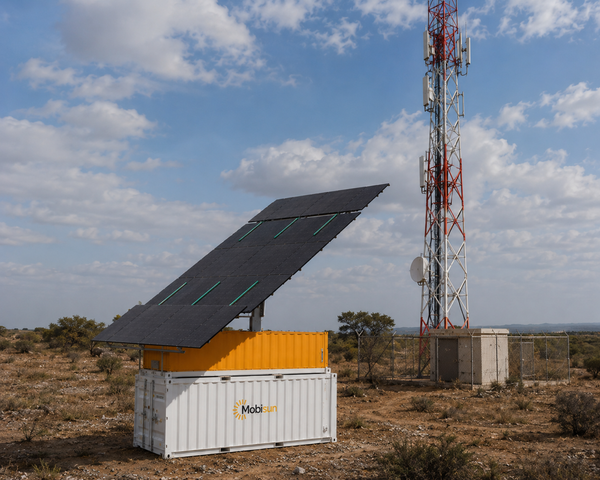
Mobisun 20ft Solar Container
Central emergency power for a field hospital or shelter location
50kWh battery · 13.3kWp solar panels · 22kVA AC outputThe 20ft Solar Container is a complete off-grid power plant in a standard container size. The system offers more storage, solar power and output power than the Solar Trailer.
The combination of 50kWh battery storage, 13.3kWp solar panels and a 22kVA AC output makes the system suitable for a larger temporary or long-term emergency facility. The container also has a 20kVA backup generator and remote monitoring.
Key specifications
- Battery storage: 50kWh
- Solar power: 13.3kWp
- Panel area: Approx. 60m²
- AC output: 22kVA
- Backup generator: 20kVA
- 230V: 1-phase, 16A
- 400V: 3-phase, 63A
- Solar tracking: Up to 25% extra yield
- Monitoring: Remote monitoring & control
- Setup time: Approx. 30 minutes
- Weight: Approx. 20 tons
Suitable for
- field hospitals
- central crisis centers
- evacuation and shelter locations
- communication sites
- logistics hubs
- temporary government facilities
- water purification and pumping systems
- regional distribution points
- longer-term recovery work
- microgrids in affected areas
Strategic advantage
The 20ft Solar Container offers a good balance between transportability and central capacity. For many medium-sized crisis locations, this is the most logical starting point for technical dimensioning.
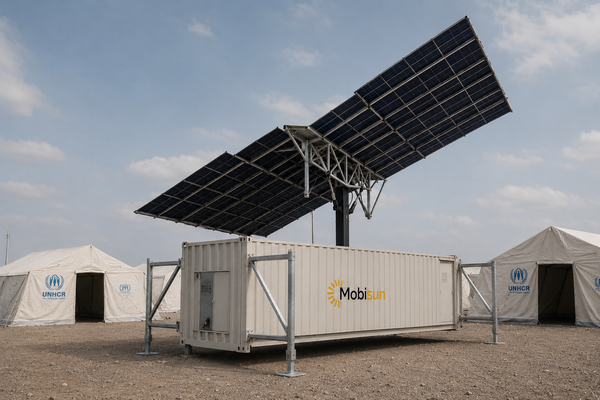
Mobisun 40ft Solar Container
Large-scale energy infrastructure for long-term crisis response
100kWh battery · 37.4kWp solar panels · 44kVA AC outputThe Mobisun 40ft Solar Container is the most powerful system in the current range. With 100kWh battery storage, 37.4kWp solar panels and 44kVA output power, the system is designed for larger and more energy-intensive crisis locations.
The solar panel field covers approximately 170m². A 40kVA backup generator can be deployed when solar production and battery capacity are temporarily insufficient. Via remote monitoring, yield, consumption and system status can be tracked remotely.
Key specifications
- Battery storage: 100kWh
- Solar power: 37.4kWp
- Panel area: Approx. 170m²
- AC output: 44kVA
- Backup generator: 40kVA
- 230V: 1-phase, 16A
- 400V: 3-phase, 63A
- Solar tracking: Up to 25% extra yield
- Monitoring: Remote monitoring & control
- Setup time: Approx. 30 minutes
- Weight: Approx. 27 tons
Suitable for
- large field hospitals
- regional crisis and coordination centers
- extensive shelter locations
- multiple simultaneous emergency services
- central logistics bases
- critical communication infrastructure
- temporary microgrids
- water and sanitary facilities
- large-scale reconstruction
- long-term off-grid deployment
Strategic advantage
The 40ft Container offers the largest combination of energy generation, battery storage and output power. This allows one system to support multiple crisis functions and subdivided power groups.
Compare the Mobisun systems for disaster response
Overview of the three systems at a glance:
| System | Battery | Solar panels | AC output | Generator | Setup | Recommended use |
|---|---|---|---|---|---|---|
| Solar Trailer | 20kWh | 8kWp | 7kVA | 10kVA | Approx. 10 min. | Initial response and mobile emergency power |
| 20ft Container | 50kWh | 13.3kWp | 22kVA | 20kVA | Approx. 30 min. | Field hospital, shelter or crisis center |
| 40ft Container | 100kWh | 37.4kWp | 44kVA | 40kVA | Approx. 30 min. | Regional hub, large shelter or microgrid |
All systems feature solar tracking, remote monitoring and connections for single- and three-phase power. The B2B systems are also designed with approximately 25% capacity reserve for extra operational reliability and peak loads.
Which system suits which crisis phase?
A crisis response often proceeds in phases. Each phase has different priorities and energy needs.
Phase 1: acute response
Typical duration: hours to several days
Priorities
- communication
- lighting
- medical triage
- registration
- battery charging
- crisis coordination
Phase 2: stabilization
Typical duration: several days to weeks
Priorities
- field hospital
- temporary shelter
- central communication
- logistics
- water and sanitation
- food and material cooling
Phase 3: recovery and temporary infrastructure
Typical duration: weeks to months
Priorities
- central crisis organization
- multiple buildings or zones
- regional logistics
- telecom
- water infrastructure
- reconstruction
- temporary microgrid
Calculate the required system
The Mobisun B2B calculator contains a standard profile of approximately 2,500W for emergency aid and medical applications. The calculator takes into account average power, operating time, season, solar production, battery capacity and any generator use.
1. Type of deployment
- crisis command post
- medical emergency post
- field hospital
- temporary shelter
- communication hub
- pump or water installation
- logistics hub
- regional crisis base
2. Average power
Estimated average power in kilowatts. A standard emergency aid profile is around 2.5kW; a field hospital between 5 and 15kW.
3. Operating time
- 8 hours
- 12 hours
- 24 hours
- 48 hours
4. Desired autonomy without sun
How long the system should be able to run on battery without new solar production. For critical applications, at least 24 hours often applies.
5. Season or weather situation
- summer
- spring or autumn
- winter
- prolonged cloudy
6. Generator available
- yes, already present
- include in system
- only as emergency reserve
- no generator allowed
Calculator result
- expected daily energy consumption
- estimated solar production
- required battery capacity
- indicative autonomy
- any generator hours
- recommended system
- option to receive the report by email
Indicative battery autonomy
The table below shows nominal battery duration without new solar production, generator use, conversion loss or safety reserve.
| Average load | Solar Trailer 20kWh | 20ft Container 50kWh | 40ft Container 100kWh |
|---|---|---|---|
| 2.5kW | Approx. 8 hours | Approx. 20 hours | Approx. 40 hours |
| 5kW | Approx. 4 hours | Approx. 10 hours | Approx. 20 hours |
| 10kW | Approx. 2 hours | Approx. 5 hours | Approx. 10 hours |
Hybrid energy for maximum operational reliability
Solar energy and battery storage can handle a large part of the daily power supply. However, in disaster response, it is unwise to base reliability solely on average weather conditions.
This is how a hybrid system works:
- The solar panels feed the current load.
- Excess energy charges the battery.
- The battery takes over consumption in the evening and night.
- Non-critical groups can be switched off when battery status is low.
- The generator is deployed when preset limits are reached.
- Once sufficient energy is available, the system returns to solar and battery.
All three large Mobisun systems can work together with a generator. Mobisun advises 10kVA for the Solar Trailer, 20kVA for the 20ft Container and 40kVA for the 40ft Container. The exact start logic, switching and priorities must be part of the project-specific technical design.
Prioritize essential power groups
In disaster response, energy must not only be generated but also consciously distributed. By using separate power groups and priorities, more energy remains available for critical functions.
Priority 1: continuously available
- emergency communication
- critical medical equipment
- emergency lighting
- network and router equipment
- alarm systems
- essential cooling
- crisis registration
Priority 2: operationally important
- regular work lighting
- laptops and office equipment
- ventilation
- logistics systems
- charging points
- supporting medical equipment
Priority 3: plannable or switchable
- non-essential heating
- large kitchen equipment
- laundry
- vehicle charging
- heavy tools
- other comfort facilities
Practical crisis configurations
Three example configurations for common crisis scenarios.
Rapid Response Energy Unit
Recommended basis
- 1 × Solar Trailer
- central 230V and 400V distribution
- communication equipment
- mobile LED lighting
- charging station for radios and phones
- protected cable set
- 10kVA generator as reserve
- remote monitoring
Suitable for
- initial emergency aid
- mobile command post
- medical triage
- communication restoration
- temporary site lighting
Field Hospital Energy Hub
Recommended basis
- 1 × 20ft Solar Container
- 50kWh battery storage
- 13.3kWp solar tracking
- 20kVA generator
- medical and general power groups
- separate group for cooling
- energy measurement and monitoring
- generator and battery reserve
Suitable for
- mobile field hospital
- larger medical post
- temporary care location
- shelter center with medical support
Regional Disaster Response Microgrid
Recommended basis
- 1 × 40ft Solar Container
- 100kWh battery storage
- 37.4kWp solar panels
- 40kVA generator
- multiple distribution cabinets
- separate groups per organization or function
- central monitoring
- communication and logistics infrastructure
Suitable for
- regional crisis center
- large shelter camp
- logistics base
- coordination of multiple emergency services
- temporary public infrastructure
Logistics and preparation
An energy system is only quickly deployable when it is clear in advance how it will be transported, placed and connected. Check before deployment:
Checklist
- accessibility for trailer or container transport
- available and sufficiently load-bearing surface
- space for unfolding the solar panels
- shade from buildings, trees and vehicles
- safe distance from public and work activities
- earthing and surge protection
- cable routes
- distribution cabinets and selectivity
- fire safety
- protection against theft or sabotage
- generator placement and fuel storage
- local laws and regulations
- trained users
Remote monitoring and energy coordination
During a crisis, those responsible must be able to quickly see how much energy is available. A practical monitoring dashboard can show, among other things:
Dashboard components
- current solar production
- current energy consumption
- battery percentage
- charge and discharge power
- remaining estimated autonomy
- generator status
- fault notifications
- consumption per period
- historical yield
- status per location
The three systems support remote monitoring and control. With multiple systems, it can be investigated whether the data can be combined in one central crisis dashboard.
From risk analysis to deployable system
Mobisun describes a process of intake, design and quote, production, delivery, installation and optional service for B2B projects. A custom proposal is usually prepared within five business days; production time is four to twelve weeks, depending on complexity.
1. Intake and scenario analysis
Determine which disaster scenarios, locations and facilities must be supported.
2. Equipment inventory
Note per device:
- normal power
- starting or peak power
- daily usage time
- voltage and connection
- critical status
- maximum permitted interruption
3. Energy and autonomy calculation
Calculate the daily energy demand, the desired reserve and the expected solar production under different conditions.
4. Technical design
Determine:
- system size
- generator strategy
- power distribution
- redundancy
- monitoring
- cabling
- earthing
- transport and placement plan
5. Testing and exercise
Test the system in advance with the actual equipment. Include the energy supply in exercises and crisis protocols.
6. Delivery and commissioning
The system is placed, connected and tested with the actual crisis facilities.
Frequently asked questions about emergency power for disaster response
Which system is the fastest to deploy?
The Solar Trailer is the most mobile and can be set up by one person in about ten minutes. The containers have a setup time of approximately thirty minutes, but require suitable transport and a prepared location.
Can a Mobisun system supply power 24 hours a day?
The system can be designed for continuous deployment, but the feasible operating time depends on consumption, solar production, battery reserve and generator strategy. For critical 24/7 applications, project-specific calculation and redundancy are required.
Can solar energy completely replace a diesel generator?
That is possible in some situations, but not in every crisis profile. With sufficient sun, storage and manageable load, the generator can remain switched off for long periods. For bad weather conditions and unexpected load, generator backup can provide extra operational reliability.
Do the systems also work at night?
Yes. The solar panels charge the battery during the day. The stored energy can be used in the evening and night.
What happens during prolonged cloudy weather?
Solar production drops. The battery reserve and possibly the integrated or coupled generator must then cover the shortfall. The Mobisun calculator uses approximately 0.8 effective sun hours for cloudy conditions.
Can medical devices be connected?
That is possible when voltage, power quality, continuous power, starting power and autonomy are suitable. Every medical application must be technically validated. For life-supporting equipment, additional certified and redundant emergency power is required.
Do the systems have 400V?
Yes. The Solar Trailer offers 400V three-phase power up to 10A. The 20ft and 40ft Containers have a 400V three-phase connection of 63A.
Can pumps be connected?
Yes, when the continuous power and starting peak are within the technical limits. Pumps must always be checked based on their maximum starting power.
Are the systems suitable for outdoor use?
The Solar Trailer has an IP54 classification. The general B2B page mentions IP54 for all three large systems. Connections, cables and distribution equipment must be appropriately protected against weather influences.
Can the systems be tracked remotely?
Yes. Remote monitoring and control are mentioned for the Solar Trailer, 20ft Solar Container and 40ft Solar Container.
Can the Solar Trailer be rented temporarily?
Yes. Mobisun offers short and long term rental and lease for the Solar Trailer. Service, maintenance, delivery and placement can be part of the agreement.
Can a generator be integrated automatically?
All large Mobisun systems can work with generator support. The automatic start, stop and switching logic must be configured and tested per project.
Energy security when regular infrastructure fails
An effective crisis response requires more than loose generators. There is a need for a scalable energy supply that is quickly deployable, can generate energy locally and supports important facilities even after sunset.
The Mobisun Solar Trailer and the 20ft and 40ft Solar Containers combine solar energy, battery storage, remote monitoring and generator support in one system. This creates a mobile energy supply for initial emergency aid, communication, field hospitals, crisis centers, temporary shelters, logistics hubs, water management and long-term reconstruction.